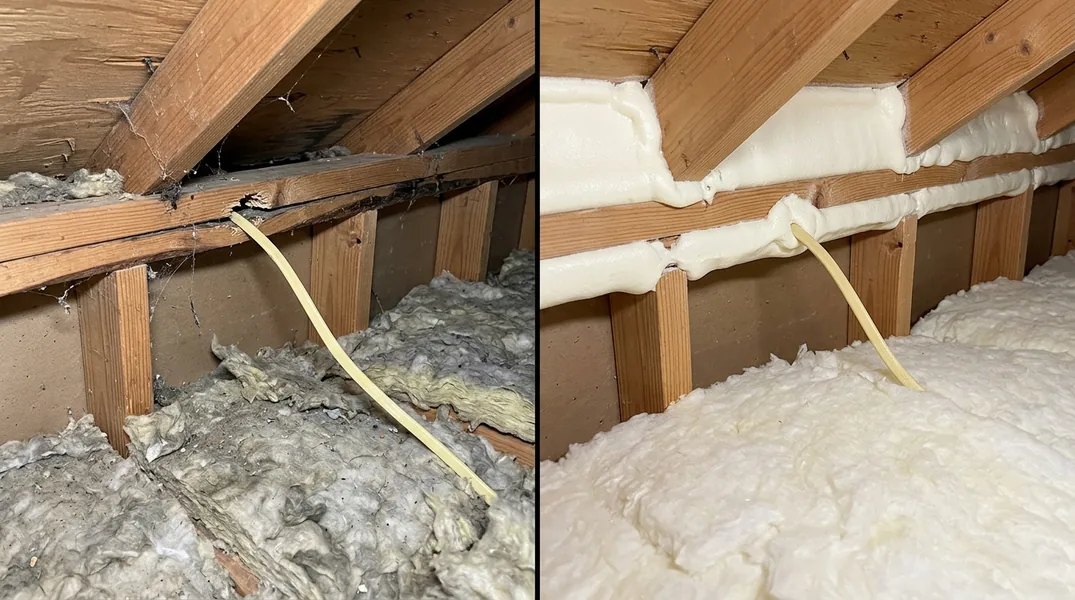
Understanding the Difference: Air Sealing vs. Full Spray Foam
When it comes to attic insulation in Longview, homeowners often face a critical decision: should they invest in air sealing alone, or upgrade to a comprehensive Attic Spray Foam Insulation solution? These two approaches address different problems, and understanding the distinction can save you money and energy costs for years to come.
Air sealing focuses on closing gaps, cracks, and penetrations where conditioned air escapes from your home. This includes sealing around electrical outlets, ductwork, plumbing vents, and other openings. It's a targeted approach that prevents air leakage without necessarily adding much insulation value. In contrast, Attic Spray Foam Insulation provides both air sealing and insulation in one application, expanding to fill cavities and creating a continuous thermal barrier. The choice between them depends on your current insulation levels, energy goals, and budget.
Spray Foam Insulation R-Value Per Inch: What You Need to Know
One of the most important metrics for any insulation is its R-value per inch, which measures thermal resistance. Closed Cell Spray Foam Insulation typically delivers an R-value of 6.0 to 7.0 per inch, making it one of the most efficient insulation materials available. Open Cell Spray Foam Insulation, by comparison, offers an R-value of 3.5 to 3.6 per inch but costs less and allows some moisture vapor transmission. For most attics in Longview, closed cell foam provides superior performance in hot, humid climates where moisture control matters.
The superior R-value of spray foam means you need less thickness to achieve your target insulation level. This efficiency translates to cost savings over time through reduced heating and cooling bills. However, the actual R-value you need depends on several factors, including your climate zone and the current state of your attic insulation.
R-Value Requirements by State: Texas Standards for Your Attic
Texas falls into climate zones 2 and 3, depending on your specific location within the state. For attics in these zones, the U.S. Department of Energy recommends an R-value of R-38 to R-60. This means if you're using closed cell spray foam with an R-value of 6.5 per inch, you would need between 5.8 and 9.2 inches of foam to meet recommended standards. If you're considering open cell foam at 3.6 per inch, you'd need roughly 10.5 to 16.7 inches to reach the same R-value range.
Many homeowners in Longview are surprised to learn how much existing fiberglass batts have settled or deteriorated over the years, leaving their attics under-insulated. A professional energy audit can determine your current R-value and help you decide whether air sealing alone will suffice or if full spray foam installation is the better investment. The thickness of spray foam needed directly impacts both performance and overall cost.
How Thick Should Spray Foam Be: Finding Your Optimal Thickness
Determining the right thickness for spray foam insulation requires balancing your climate zone requirements, existing insulation, and budget. As mentioned, meeting Texas standards typically requires 6 to 9 inches of closed cell foam. However, some homeowners choose to exceed minimum requirements for enhanced comfort and energy savings, especially if they live in older homes with poor insulation histories.
The thickness you choose also affects installation time and labor costs. Thicker applications take longer to cure and require more material, but the investment often pays for itself through energy bill reductions. A professional contractor can assess your attic's current condition and recommend the optimal thickness based on your specific needs. If you're unsure whether you need 4 inches, 6 inches, or more, a free estimate from Longview Spray Foam Insulation can provide personalized guidance.
Rebates: Reduce Your Installation Costs
One of the most overlooked benefits of upgrading your attic insulation is the potential for tax savings. The federal insulation rebates allows eligible homeowners to claim a percentage of qualifying insulation expenses on their federal income tax return. These credits have been reinstated and expanded in recent years, making this an excellent time to invest in spray foam. Eligibility typically requires that the insulation meets specific R-value requirements and is installed in your primary residence.
Beyond rebates, many homeowners qualify for insulation rebates from local utility companies and state energy programs. The federal insulation tax credit ended on December 31, 2025, so ask your utility company about any current rebates instead. Texas has several active rebate programs aimed at improving home energy efficiency. When you contact Longview Spray Foam Insulation at (903) 500-7841, our team can discuss available incentives and help you understand which credits and rebates you might qualify for, potentially making your spray foam project much more affordable than you initially thought.
Attic Spray Foam Insulation Cost in Longview: What to Budget
The pricing for spray foam insulation varies based on several factors, including the type of foam (open cell vs. closed cell), thickness required, attic size, and existing conditions. Open cell spray foam typically costs between $0.50 and $0.75 per board foot, while closed cell foam ranges from $1.00 to $2.00 per board foot. For a typical 1,500 square foot attic requiring 6 inches of closed cell foam, you might expect to invest between $3,000 and $6,000 before accounting for rebates.
Air sealing alone is significantly less expensive, often costing $500 to $2,000 depending on the scope of work required. However, if your attic lacks adequate insulation, air sealing without adding insulation won't solve your energy efficiency problems. Many homeowners find that the long-term energy savings from spray foam justify the higher upfront cost. The key is to get accurate quotes from qualified contractors in your area. Longview Spray Foam Insulation offers transparent pricing and can provide detailed estimates so you understand exactly what you're investing in and what returns you can expect.
Making Your Decision: Air Sealing, Spray Foam, or Both
The best choice between air sealing and spray foam depends on your current situation. If your attic already has adequate insulation (R-38 or higher) but you notice drafts or energy inefficiency, air sealing might be sufficient. However, if your insulation is thin, compressed, or unevenly distributed, full spray foam installation will provide superior results. Many energy-conscious homeowners opt for a hybrid approach: air sealing first to address major leaks, then adding spray foam for comprehensive insulation coverage.
Your decision should also factor in long-term plans for your home. If you're planning to stay in your Longview residence for many years, the energy savings and comfort improvements from spray foam justify the investment. If you're considering selling soon, consult with a real estate professional about which improvements provide the best return on investment. Whatever you decide, working with experienced professionals ensures the job is done correctly. Contact Longview Spray Foam Insulation today at (903) 500-7841 or request a free estimate to explore your options and discover which solution is right for your attic.
Looking for a professional spray foam insulation contractor in Longview? Longview Spray Foam Insulation responds fast for all your spray foam insulation needs.
Get a Free Quote