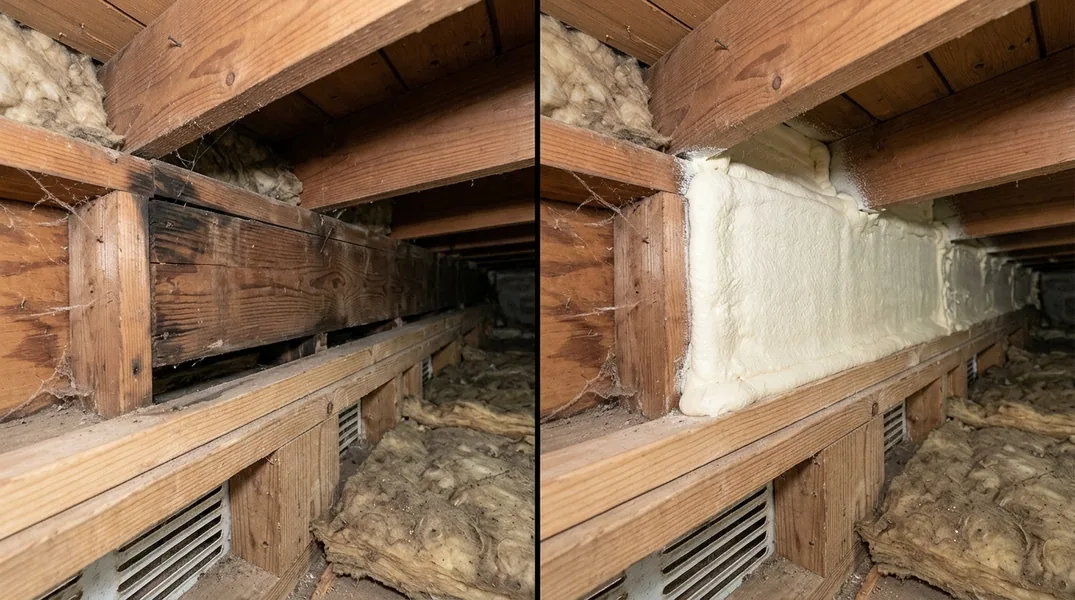
Why Bonus Rooms Over Garages Need Special Insulation Attention
Bonus rooms built above garages present a unique insulation challenge that many homeowners in Longview don't fully appreciate until their energy bills spike. Unlike rooms on upper floors that sit above conditioned living space, a bonus room directly above a garage sits above an unheated (or minimally heated) zone. This creates a significant temperature differential that your HVAC system must constantly fight to overcome.
The problem becomes even more acute during Texas winters and summers. In winter, cold air from the garage rises into the bonus room, forcing your heating system to work overtime. In summer, the garage becomes an oven, radiating heat upward into your bonus space. Without proper insulation, you're essentially trying to condition an outdoor environment, which explains why many homeowners report their bonus rooms feeling either uncomfortably cold or stifling hot depending on the season.
Many homes in Spring Hill and Hallsville were built with standard fiberglass batts or blown-in cellulose in these spaces. While these materials may have been adequate decades ago, they settle over time, lose effectiveness, and often fail to create an air-tight seal. This is where professional Attic Spray Foam Insulation makes a genuine difference in your home's comfort and efficiency.
The Hidden Problem: Old Insulation and Vermiculite Concerns
If your home was built before the 1980s, there's a meaningful chance your attic or bonus room contains vermiculite insulation. Vermiculite insulation gained popularity in mid-century construction because it was inexpensive, easy to install, and provided reasonable thermal resistance. However, many vermiculite products were mined from deposits contaminated with asbestos. While not every vermiculite product contains asbestos, the EPA has flagged this material as a potential health concern, especially in older homes.
Beyond the asbestos question, vermiculite insulation degrades significantly over time. The material compacts, loses its insulating value, and can develop moisture problems that lead to mold growth. If you've noticed musty odors in your bonus room or seen any visible discoloration on attic framing, old insulation removal may already be overdue. The good news is that professional insulation removal services can safely extract this material and prepare your space for modern, high-performance alternatives.
Identifying old insulation removal needs doesn't require guesswork. A qualified contractor can inspect your bonus room, assess the current insulation condition, and determine whether removal is necessary before installation of new materials. Many homeowners are surprised to learn that their existing insulation is doing far less work than they assumed.
Insulation Removal Cost in Longview: What to Budget for Your Project
Understanding insulation removal cost is essential for planning your bonus room upgrade. Several factors influence the final expense. The square footage of the space is the primary driver, but the type of existing insulation, accessibility, and whether hazardous materials are present all affect the overall bill. Vermiculite insulation removal, for example, requires specialized handling and disposal procedures that cost more than standard fiberglass removal.
In the Longview area, attic insulation removal typically ranges from a few hundred dollars for smaller spaces to several thousand for extensive projects. The good news is that removal is usually a one-time cost that pays dividends through improved efficiency and comfort. Many homeowners find that the energy savings from upgraded insulation offset the removal and installation costs within two to three years.
Old insulation removal cost varies, but it's important to view it as an investment rather than an expense. Attempting DIY removal of old insulation, especially if asbestos might be present, creates health risks and potential liability. Professional contractors have the equipment, training, and insurance to handle the job safely. When you request a free estimate from Longview Spray Foam Insulation, we'll provide a transparent breakdown of removal costs and the recommended replacement solution.
Spray Foam Solutions for Bonus Rooms: Why It Outperforms Traditional Insulation
Closed Cell Spray Foam Insulation has become the gold standard for bonus rooms over garages, and the reasons are straightforward. Unlike fiberglass batts or blown-in materials, spray foam expands to fill every cavity, crack, and gap. This complete air sealing prevents the thermal leakage that plagues older insulation methods. For a bonus room sitting directly above an unheated garage, this air-tight barrier is transformative.
The R-value per inch of closed cell foam is significantly higher than traditional insulation, meaning you achieve superior thermal performance in the same or even reduced thickness. This matters when headroom is limited in a bonus room. Additionally, closed cell foam is moisture resistant, which protects against the mold and degradation problems common with older materials that absorb water from humid garage air.
Open Cell Spray Foam Insulation is another option worth considering if your bonus room is already finished and you need a less rigid material. Open cell foam is lighter, easier to cut, and slightly less expensive than closed cell, though it offers a lower R-value per inch. The choice between closed and open cell depends on your specific situation, which is why a professional assessment is valuable.
The Removal and Replacement Process: What to Expect
When you decide to address your bonus room insulation, the process begins with a thorough inspection. A technician will assess the current condition, identify any hazardous materials, measure the space, and discuss your goals and budget. If old insulation removal is needed, this typically happens first. The team will carefully extract existing materials, dispose of them properly, and prepare the framing for new insulation.
After removal, the space is cleaned and inspected for any structural issues, air leaks, or moisture problems that need addressing. Once the area is ready, spray foam application begins. The foam is sprayed directly onto the roof deck and walls, expanding to fill every gap and creating a seamless thermal barrier. The process is relatively quick, though it does require temporary ventilation management and a brief drying period.
Throughout the process, a professional crew will protect your finished bonus room from overspray and ensure the installation meets all local building codes. The entire project, from removal through foam application, typically takes one to three days depending on the scope. When you contact Longview Spray Foam Insulation at (903) 500-7841, we'll walk you through each step and answer any questions about the timeline.
Next Steps: Getting Your Bonus Room Insulation Assessment
If you own a bonus room over a garage in Spring Hill, Hallsville, or anywhere in the Longview area, the next logical step is a professional evaluation. You don't have to wonder whether your current insulation is adequate or whether removal is necessary. An expert assessment provides clarity and a concrete plan forward.
Longview Spray Foam Insulation offers free estimates with no obligation. We'll inspect your bonus room, discuss your concerns, explain your options, and provide transparent pricing for both removal and new installation. Whether your home contains old vermiculite insulation, settling fiberglass, or simply inadequate thermal protection, we have the expertise and materials to deliver a lasting solution.
Contact us today by calling (903) 500-7841 or visiting our website to schedule your free estimate. Comfortable, energy-efficient bonus rooms are achievable, and the process starts with one conversation.
Looking for a professional spray foam insulation contractor in Longview? Longview Spray Foam Insulation responds fast for all your spray foam insulation needs.
Get a Free Quote