Understanding Spray Foam Insulation Costs in Longview
When homeowners in Longview start researching insulation upgrades, cost is often the first question on their minds. Spray foam insulation has become increasingly popular over the past decade because it delivers superior energy efficiency compared to traditional fiberglass or cellulose options. However, pricing varies significantly based on the type of foam, the area being insulated, and the specific challenges your home presents.
The investment in Attic Spray Foam Insulation typically ranges from $1.50 to $3.50 per board foot for closed cell foam, while open cell varieties run between $0.50 and $1.50 per board foot. For a typical 1,200 square foot attic in Longview, homeowners can expect total costs between $2,000 and $6,500 depending on foam type and depth. Understanding these price ranges helps you budget appropriately and compare quotes from local contractors like Longview Spray Foam Insulation.
Prefer a number before the details? Get your instant ballpark range in 20 seconds, then read on for what moves it.
Attic Spray Foam Insulation Cost in Longview: What to Budget
Your attic is the largest source of heat loss in most homes, making it the priority for many insulation projects. Attic Spray Foam Insulation costs depend heavily on whether you choose closed cell or open cell foam. Closed cell foam, which provides a spray foam moisture barrier and superior R-value, costs more upfront but offers better performance in humid climates like East Texas. Open cell foam is more budget-friendly and still provides excellent insulation, though it doesn't function as a moisture barrier.
Most attic projects in the Longview area fall between $3,000 and $8,000 for complete coverage. The final price depends on attic accessibility, whether existing insulation needs removal, and your desired R-value. Homes with attic moisture problems or condensation in attic spaces may benefit from the added expense of closed cell foam, which acts as both insulation and a vapor barrier. To get an accurate quote tailored to your specific situation, contact Longview Spray Foam Insulation at (903) 500-7841 for a free estimate.
Closed Cell vs. Open Cell: Understanding the Price Difference
Closed Cell Spray Foam Insulation is the premium option, commanding higher prices because of its superior performance characteristics. This dense foam creates an effective spray foam moisture barrier, preventing water vapor from penetrating into your insulation and framing. For homeowners dealing with condensation in attic spaces or high humidity concerns common in the Texas climate, closed cell foam is worth the investment. It achieves R-values around 6.5 to 7.0 per inch, meaning you need less thickness to achieve your target insulation level.
Open Cell Spray Foam Insulation offers a more economical alternative with R-values around 3.5 to 3.6 per inch. While it requires greater thickness to match closed cell performance, it remains significantly cheaper and still outperforms traditional insulation materials. Open cell foam is permeable, allowing moisture to pass through, so it works better in homes where a separate vapor barrier is already installed. For many homeowners in Kilgore and surrounding areas, open cell foam provides the best balance of performance and affordability.
Wall and Crawl Space Spray Foam Pricing
Wall & Injection Foam Insulation projects typically cost between $0.75 and $2.00 per square foot, depending on wall construction and foam type. Injection foam works well for existing walls where you cannot access the cavity from inside, making it an excellent choice for older homes. The process involves drilling small holes and injecting foam into the wall cavity, then sealing the access points. This method avoids the need for wall demolition and provides consistent insulation throughout the wall assembly.
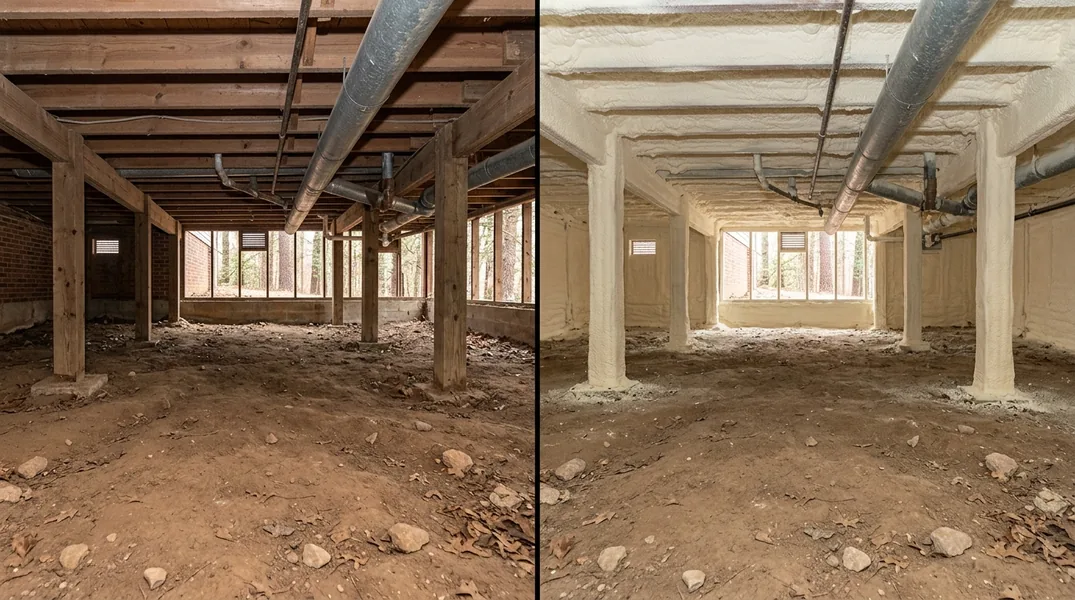
Crawl space insulation represents another significant investment area, with costs ranging from $2,000 to $8,000 for a typical home. Spray foam in crawl spaces serves dual purposes: it insulates the space and creates a moisture barrier that prevents ground moisture from affecting your home's interior. This is particularly important in humid regions where attic moisture problems and condensation in attic spaces can develop when crawl space moisture isn't properly controlled. Many homeowners find that sealing and insulating their crawl space reduces overall moisture issues throughout the home, including in upper story attics.
Factors That Influence Your Final Spray Foam Cost
Several variables affect the final pricing you'll receive from local contractors. The current condition of your space matters significantly. If your attic has existing insulation that needs removal, labor costs increase. Attic accessibility also plays a role; homes with low attic clearance or difficult roof configurations require more time and careful maneuvering. The presence of attic moisture problems or condensation in attic areas may necessitate additional preparation work before foam installation, such as addressing roof leaks or improving ventilation.
Geographic factors and seasonal timing can also influence costs. Projects completed during off-season months sometimes qualify for discounts, while summer demand may push prices higher. The complexity of your home's structure, including the number of penetrations, ductwork, and obstacles, affects both material usage and labor time. Additionally, if you're addressing multiple areas such as attics, walls, and crawl spaces in one project, contractors may offer bundled pricing. The best way to understand what your specific project will cost is to reach out to Longview Spray Foam Insulation and discuss your needs with their team.
Why Moisture Control Matters: The Hidden Cost of Ignoring It
Many homeowners focus solely on the insulation R-value when budgeting for spray foam, but moisture management is equally critical. Without proper moisture control, your insulation loses effectiveness, and your home becomes vulnerable to mold, rot, and structural damage. A proper spray foam moisture barrier prevents these costly problems before they start. Closed Cell Spray Foam Insulation functions as both insulation and a vapor barrier, eliminating the need for separate moisture control products in many applications.
Condensation in attic spaces occurs when warm, moist air contacts cold surfaces, creating water droplets that soak into insulation and framing. This problem accelerates in humid climates and becomes especially problematic when attic moisture problems go unaddressed. The cost of repairing water damage, replacing rotted wood, and treating mold far exceeds the initial investment in quality spray foam with integrated moisture protection. When evaluating spray foam costs, consider the long-term savings and protection that proper moisture control provides. If you're concerned about condensation or moisture issues in your home, contact Longview Spray Foam Insulation at (903) 500-7841 for a free estimate and professional assessment.
Before you call, get your instant ballpark range in 20 seconds so you start the conversation already knowing roughly what your job should cost.
Looking for a professional spray foam insulation contractor in Longview? Longview Spray Foam Insulation responds fast for all your spray foam insulation needs.
Get a Free Quote