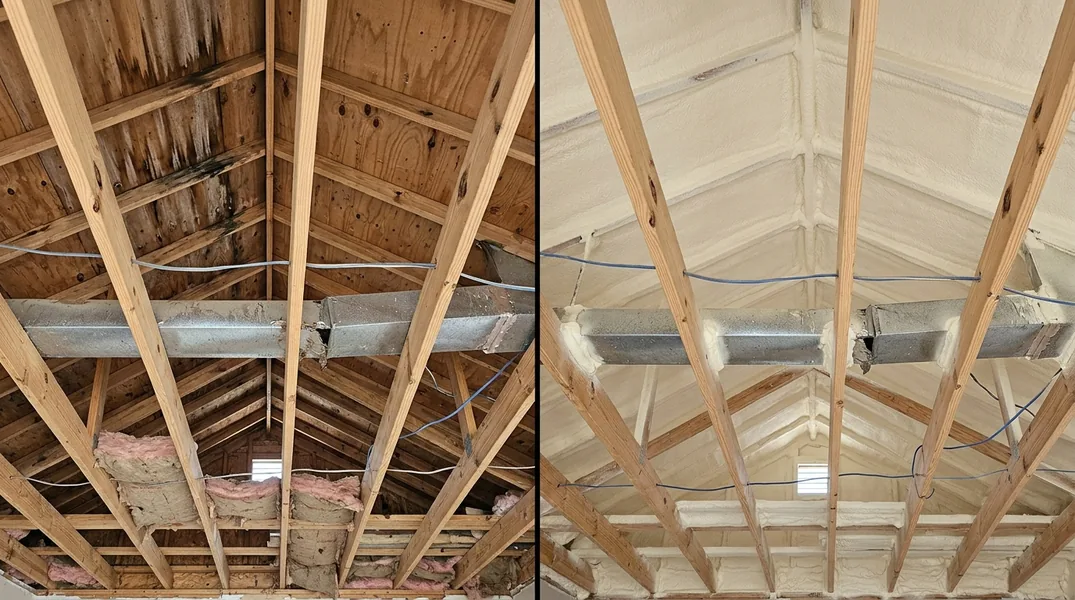
Understanding Spray Foam Insulation for Attics
When it comes to protecting your home from Longview's hot summers and occasional cold snaps, Attic Spray Foam Insulation has become one of the most effective solutions available to homeowners. Unlike traditional fiberglass batts or blown-in cellulose, spray foam creates an air-tight seal that prevents heat transfer and air infiltration. This means your HVAC system doesn't have to work as hard to maintain comfortable indoor temperatures, which translates directly into lower energy bills.
Spray foam insulation comes in two primary types, each with distinct characteristics, performance levels, and applications. The choice between them isn't simply about picking the cheapest option. Instead, it's about understanding your home's specific needs, your climate zone, and your long-term goals for comfort and efficiency. Whether you're dealing with an older home that's been losing conditioned air through gaps and cracks or you're building new construction, spray foam offers advantages that traditional insulation materials simply cannot match. The key is determining which type serves your Longview home best.
What is Open Cell Spray Foam Insulation?
Open Cell Spray Foam Insulation is a lighter, more flexible material that expands significantly after application. The cells within the foam are not completely closed, which means air and moisture can pass through them to some degree. This characteristic makes open cell foam softer and easier to cut or fit around obstacles, plumbing, and electrical wiring in your attic. The material typically has a density of around 0.5 pounds per cubic foot, making it considerably lighter than its closed cell counterpart.
One of the primary advantages of open cell spray foam is its lower cost compared to closed cell options. For homeowners in Longview working with a budget, this can be an attractive entry point into modern insulation technology. Open cell foam also provides excellent sound dampening properties, which can reduce noise transmission from outside or between rooms. However, because it's more permeable to moisture, open cell foam is generally recommended for interior applications where it won't be exposed to direct water intrusion. It typically achieves an R-value of around 3.5 to 3.6 per inch, which is respectable but lower than closed cell alternatives.
What is Closed Cell Spray Foam Insulation?
Closed Cell Spray Foam Insulation is a denser, more rigid material where the cells are completely sealed. This creates a vapor barrier within the foam itself, making it highly resistant to moisture infiltration. Closed cell foam expands less than open cell during application but provides superior structural support and air sealing. With a density typically ranging from 1.5 to 2 pounds per cubic foot, this material is significantly heavier and more robust than open cell alternatives.
The moisture resistance of closed cell spray foam makes it ideal for attic applications in humid climates or areas prone to condensation issues. It also offers superior insulating performance, delivering R-values of approximately 6 to 7 per inch, which means you need less material to achieve the same thermal resistance. This higher performance comes at a premium pricing point, but many homeowners find the investment worthwhile for the enhanced protection and energy savings. Additionally, closed cell foam provides structural reinforcement to roof decks and can help resist wind uplift, which is an added benefit in areas susceptible to severe weather.
Climate Considerations for Longview Homes
Longview experiences a humid subtropical climate with hot summers, mild winters, and significant moisture in the air throughout much of the year. This climate profile has important implications for which spray foam type makes the most sense for your attic. The combination of heat and humidity means that proper moisture management in your attic space is critical to preventing mold growth, wood rot, and structural damage over time. An improperly ventilated attic in this climate can become a breeding ground for moisture-related problems that compromise both your home's integrity and your family's health.
For most Longview homes, Closed Cell Spray Foam Insulation is often the better choice because of its built-in vapor barrier properties. When you create a sealed attic insulation system with closed cell foam, you're essentially creating an unvented attic space that's protected from the outside humidity. This approach, known as an unvented attic spray foam system, has become increasingly popular in humid climates because it eliminates the moisture problems associated with traditional ventilated attics. However, open cell foam can still work well if your attic is properly ventilated and you're willing to accept some additional moisture management considerations.
Attic Spray Foam Insulation Cost in Longview: What to Budget
Understanding the financial investment required for spray foam insulation is essential for making an informed decision. Pricing for spray foam insulation varies based on several factors including the type of foam selected, the size of your attic space, existing insulation that needs removal, and the complexity of your roof structure. Open cell spray foam typically costs between 40 to 60 cents per board foot, while closed cell spray foam ranges from 1 dollar to 1.50 dollars per board foot. For an average-sized attic in Longview, this could mean a difference of several thousand dollars between the two options.
While closed cell spray foam represents a larger upfront investment, many homeowners recover that cost through energy savings within 5 to 10 years, depending on your current energy bills and local utility rates. Additionally, closed cell foam's superior R-value means you need less material to achieve adequate insulation, which can partially offset the per-unit cost difference. To get an accurate estimate tailored to your specific home and needs, reach out to Longview Spray Foam Insulation for a free estimate. Our team can evaluate your attic space, discuss your goals, and provide transparent pricing options that fit your budget.
Unvented Attic Spray Foam: Creating a Sealed, Conditioned Space
One of the most significant advantages of spray foam insulation is the ability to create an unvented attic spray foam system. Unlike traditional attics that require soffit and ridge vents to allow air circulation, an unvented attic sealed with spray foam becomes a conditioned space that's part of your home's thermal envelope. This approach offers numerous benefits including better moisture control, improved energy efficiency, and the ability to use attic space for storage or even finished rooms without worrying about temperature fluctuations.
When spray foam is applied directly to the underside of your roof deck, it creates an air-tight barrier that prevents conditioned air from escaping and outdoor air from infiltrating. This is particularly valuable in Longview where summer heat can be intense and air conditioning costs are a significant portion of most homeowners' utility bills. An unvented attic system also eliminates the ice dam problems that can occur in colder climates when warm attic air melts snow on the roof. For homeowners considering this approach, working with experienced professionals is essential to ensure proper installation and compliance with building codes. If you're interested in learning more about whether an unvented attic spray foam system is right for your home, contact Longview Spray Foam Insulation at (903) 500-7841 to discuss your options.
Looking for a professional spray foam insulation contractor in Longview? Longview Spray Foam Insulation responds fast for all your spray foam insulation needs.
Get a Free Quote