Understanding Climate Zone 3A and Your Longview Home
Most homeowners don't realize that their local climate zone dramatically affects how insulation performs. Longview sits squarely in Climate Zone 3A, a humid subtropical region characterized by hot, humid summers and mild winters. This specific classification matters far more than you might think when choosing the right insulation strategy for your attic and crawl spaces.
Climate Zone 3A presents unique challenges that traditional fiberglass batts and blown-in cellulose simply cannot handle effectively. The combination of high humidity levels, temperature fluctuations, and seasonal moisture intrusion means your insulation must do more than just resist heat transfer. It needs to manage moisture, resist settling, and maintain its R-value year after year without degradation. Understanding these regional demands is the first step toward making an informed decision about protecting your home's thermal envelope.
Why Traditional Insulation Falls Short in Zone 3A Climates
Fiberglass batts and blown-in insulation have dominated the market for decades, but they were never designed with Climate Zone 3A's specific conditions in mind. These materials absorb moisture like a sponge, which is particularly problematic in Longview's humid environment. When insulation absorbs moisture, its R-value plummets. A batts system rated R-38 can lose 50 percent of its effectiveness when saturated, leaving your home vulnerable to energy waste and temperature swings.
Beyond moisture absorption, traditional insulation settles over time. Gravity pulls fiberglass and cellulose downward, creating gaps and voids in your attic where conditioned air escapes. In a humid subtropical climate where your air conditioning runs constantly during summer months, these gaps translate directly into higher utility bills. Additionally, conventional insulation doesn't provide an air barrier, which means warm, humid outside air can infiltrate your attic space, condensing on cooler surfaces and promoting mold growth. This is a genuine concern in Longview, where humidity levels regularly exceed 70 percent during warm months.
How Spray Foam Insulation Addresses Zone 3A Challenges
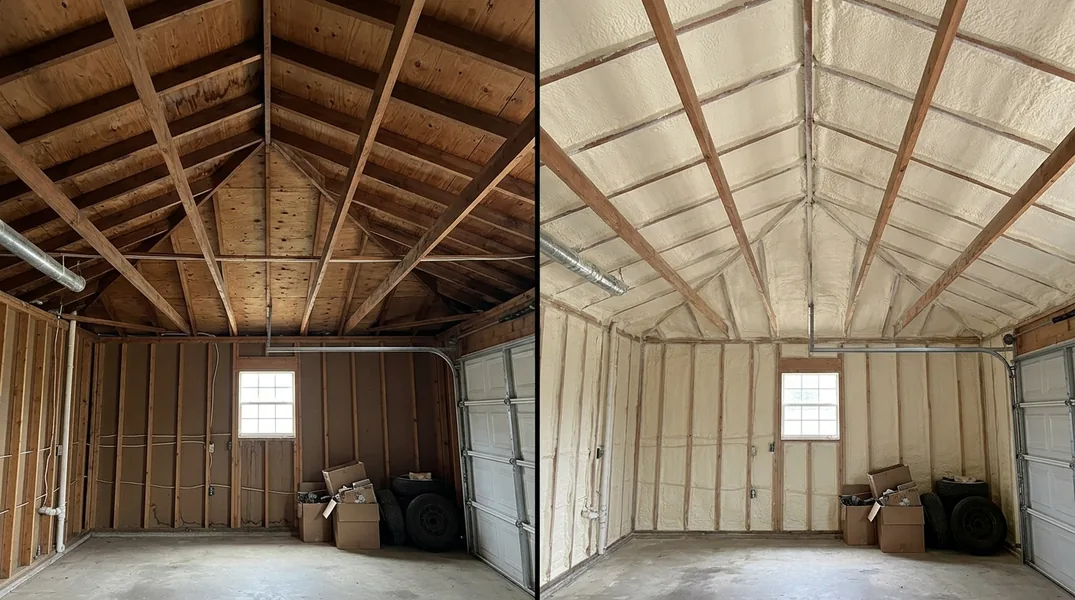
Attic Spray Foam Insulation was engineered to solve the exact problems that plague traditional materials in humid climates. When spray foam is applied, it expands to fill every cavity, crack, and void in your attic space. This expansion creates a continuous air barrier that prevents outside air from entering your home and conditioned air from escaping. Unlike fiberglass, which leaves gaps around joists and penetrations, spray foam conforms to irregular shapes and creates a seamless thermal envelope.
The moisture resistance of spray foam is particularly valuable in Climate Zone 3A. Closed Cell Spray Foam Insulation has a closed cellular structure that resists moisture absorption almost entirely. Even if humidity levels spike during summer storms or if a roof leak occurs, closed cell foam maintains its R-value and doesn't support mold growth. Open cell foam, while more affordable, still outperforms traditional insulation by resisting moisture far better than fiberglass or cellulose. Additionally, spray foam never settles. Once it hardens, it stays in place permanently, maintaining consistent insulation performance for the life of your home.
Crawl Space Insulation in Climate Zone 3A: A Critical Consideration
Many homeowners focus exclusively on attic insulation and overlook their crawl spaces, but this is a costly mistake in humid subtropical climates. Your crawl space is the foundation of your home's thermal performance, and it's especially vulnerable to moisture problems in Zone 3A. The ground beneath your home constantly releases moisture through a process called vapor drive, and humid outside air infiltrates through vents and gaps in the foundation. Without proper insulation and vapor control, this moisture rises into your living spaces, increasing humidity levels and making your air conditioning work harder.
The best insulation for crawl space applications in Climate Zone 3A is Closed Cell Spray Foam Insulation. When applied to the band board, rim joist, and walls of your crawl space, it creates an effective vapor barrier that prevents ground moisture from entering your home. Crawl space spray foam also eliminates air leaks that would otherwise allow hot, humid outside air to infiltrate during summer months. Homeowners in Gladewater and surrounding areas have reported significant improvements in indoor humidity levels and energy efficiency after upgrading their crawl spaces with spray foam. This is especially important for pier and beam homes, which are common in our region and particularly susceptible to moisture problems.
Pier and Beam Homes: Special Insulation Needs in Longview
Pier and beam construction is prevalent throughout East Texas, and these homes have unique insulation requirements that differ significantly from slab-on-grade homes. Because pier and beam homes have open space beneath them, they're exposed to outside air on all sides. Cold floors in winter and difficulty maintaining consistent indoor temperatures are common complaints among pier and beam homeowners. Climate Zone 3A's temperature swings, though mild compared to northern regions, are still enough to cause discomfort and energy waste if your crawl space isn't properly insulated.
Pier and beam insulation traditionally involved fiberglass batts hung between floor joists, but this approach is ineffective in humid climates. The exposed underside of your home allows air to circulate freely around these batts, undermining their insulating value. Additionally, humidity from the soil and outside air degrades fiberglass insulation over time. Modern solutions involve sealing and insulating your crawl space with closed cell foam, which eliminates cold floors and creates a conditioned space beneath your home. Many homeowners discover that upgrading their pier and beam insulation with spray foam reduces their heating and cooling costs by 15 to 25 percent while dramatically improving comfort. If you're experiencing cold floors or uneven temperatures in your Longview home, crawl space insulation may be the solution you've been seeking.
Spray Foam Insulation Pricing and Investment in Longview
Understanding the financial investment required for spray foam insulation is essential to making a confident decision. Pricing for attic and crawl space spray foam varies based on several factors, including the square footage of your space, the type of foam selected (open cell versus closed cell), and the complexity of your home's construction. While spray foam typically costs more per square foot than traditional insulation, the long-term energy savings and durability make it a worthwhile investment for homeowners committed to protecting their homes in Climate Zone 3A.
The best way to understand your specific costs is to schedule a free estimate with Longview Spray Foam Insulation. Our team will assess your attic, crawl space, and any other areas where spray foam could benefit your home. We'll discuss your options, explain the differences between open cell and closed cell foam, and provide transparent pricing so you can make an informed decision. Many homeowners are surprised to learn that the energy savings from spray foam insulation pay for itself within 5 to 7 years, after which you're essentially heating and cooling your home for free. Call us today at (903) 500-7841 to learn more about how spray foam can transform your home's comfort and efficiency.
Looking for a professional spray foam insulation contractor in Longview? Longview Spray Foam Insulation responds fast for all your spray foam insulation needs.
Get a Free Quote